203, Maharaja Square, Nr. Maharaja Chowk, Sunpharma Road, Vadodara - 390012


Finding a dependable cleaning provider is important for keeping a property neat, hygienic, and comfortable…
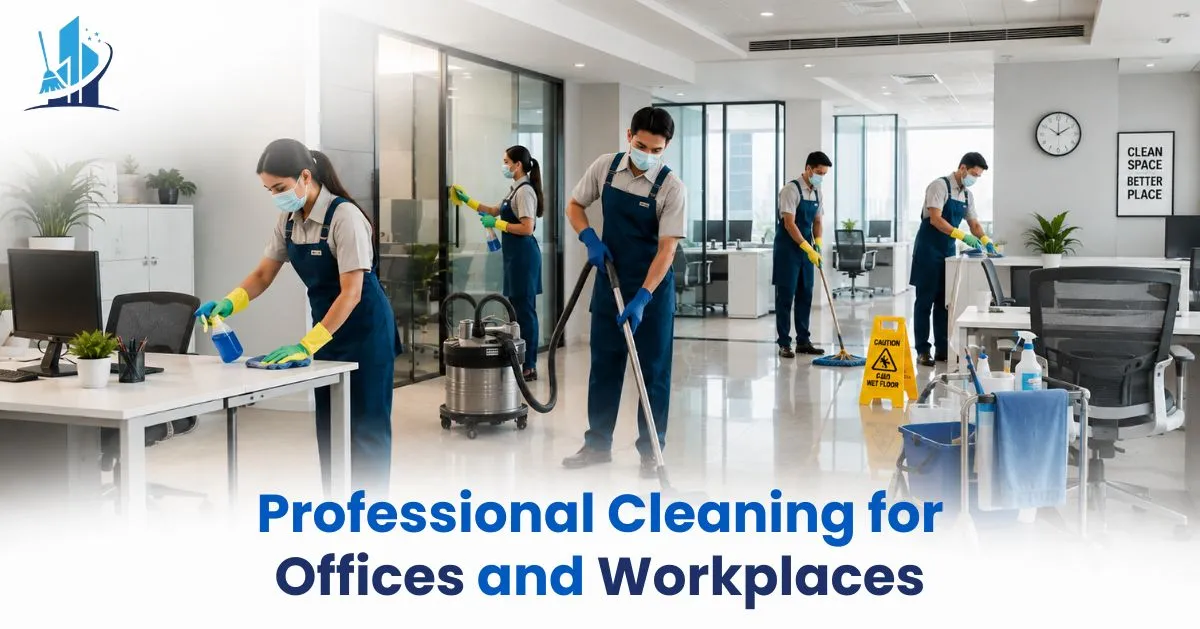
A clean and well-maintained office creates a more organised and professional environment for employees, clients, and visitors. Workplaces are used throughout the day, and areas such as workstations, meeting rooms, floors, restrooms, pantries, and common spaces can gradually accumulate dust, dirt, waste, and other buildup.
Regular Office Cleaning Services help businesses maintain cleaner office environments through planned routines and appropriate cleaning methods. Depending on the workplace, cleaning requirements may range from daily maintenance to detailed cleaning of carpets, upholstery, glass surfaces, and other frequently used areas.
Why Professional Cleaning Is Important for Offices?
Offices have different cleaning requirements because multiple people use the same spaces throughout the day. Shared facilities, frequently touched surfaces, and high-traffic areas require regular attention to maintain a neat and hygienic environment.
Professional cleaning helps businesses manage these requirements through a structured approach. Instead of relying on employees to handle cleaning responsibilities alongside their regular work, a planned service can focus on maintaining different areas according to their usage and condition.
Consistent maintenance also helps businesses keep their workplaces presentable for employees, clients, and visitors.
Routine Cleaning for Everyday Office Maintenance
Routine cleaning is an important part of maintaining a professional office environment. Regular attention helps manage the dust, dirt, and waste that accumulate through everyday activities.
Routine cleaning may include:
- Dusting and wiping workstations
- Cleaning desks and tables
- Sweeping and mopping floors
- Vacuuming suitable areas
- Emptying waste bins
- Maintaining common spaces
- Cleaning meeting rooms
- Wiping frequently used surfaces
The frequency of cleaning can be planned according to the size of the office, number of employees, daily foot traffic, and operational requirements.
Maintaining Different Areas of the Workplace
Every business environment has different cleaning requirements based on its layout, daily activities, employee strength, and the number of people using the space. Smaller offices may require regular attention to workstations, floors, and restrooms, while larger facilities often need planned maintenance across multiple departments and shared areas.
A structured approach using Workplace Cleaning Services can help businesses maintain meeting rooms, reception areas, pantries, corridors, and common spaces according to their usage. Understanding how each area is used also makes it easier to create a suitable cleaning schedule and prioritise areas that require more frequent attention.
Workstations and Employee Areas
Workstations are among the most frequently used areas in an office. Desks, chairs, computers, and nearby surfaces can collect dust and dirt during daily operations.
Regular dusting and surface cleaning can help maintain a neat and organised working environment. Cleaning schedules should also consider shared workspaces and areas used by multiple employees.
A well-maintained workstation area contributes to the overall appearance and organisation of the office.
Floor Cleaning and Maintenance
Office floors experience continuous foot traffic throughout the day. Dirt and dust can enter from outside, while spills and regular use can affect the appearance of different flooring surfaces.
Floor cleaning requirements may include sweeping, mopping, vacuuming, or other suitable methods depending on the material. Carpets may also require periodic attention to manage accumulated dust and dirt.
The cleaning method should be selected according to the type of flooring and the level of usage in each area.
Restroom and Pantry Cleaning
Restrooms and pantry areas require regular maintenance because they are shared by multiple employees. These spaces can quickly become untidy without consistent cleaning.
Cleaning may involve attention to:
- Sinks and fixtures
- Countertops
- Floors
- Mirrors
- Pantry surfaces
- Appliances
- Waste bins
- Frequently used areas
Regular maintenance helps keep these spaces organised and suitable for daily use.
Carpet and Upholstery Care
Office carpets and upholstered furniture can gradually collect dust, dirt, and stains that routine surface cleaning may not always address effectively. The cleaning method should be selected according to the material, condition, and level of usage.
With suitable Office Cleaning Services, businesses can arrange appropriate care for carpets and upholstery as part of their overall workplace maintenance. Periodic detailed cleaning can help maintain the appearance of office interiors and furniture while addressing accumulated buildup over time.
The frequency of cleaning should depend on the level of usage, workplace conditions, and maintenance requirements.
Glass and Window Cleaning
Glass partitions, windows, and doors contribute to the overall appearance of an office. However, fingerprints, dust, and stains can become noticeable when these surfaces are not cleaned regularly.
Regular glass cleaning can help maintain clarity and improve the presentation of workspaces, meeting rooms, reception areas, and other professional environments.
Cleaning requirements may also include frames and surrounding surfaces to maintain a consistent appearance.
Common Areas and Meeting Rooms
Reception areas, corridors, meeting rooms, and other shared spaces are important parts of a professional workplace. These areas are used by employees as well as visitors and clients.
Regular cleaning can help maintain:
- Tables and furniture
- Floors and carpets
- Shared surfaces
- Reception spaces
- Meeting room areas
- Corridors and walkways
The cleaning schedule can be adjusted based on how frequently each area is used.
Need professional cleaning support for your office? Contact Us to discuss your cleaning requirements.
The Importance of Planned Cleaning Schedules
Cleaning activities are more effective when they are planned according to the specific requirements of a business. Not every area requires the same level of attention or cleaning frequency, particularly in workplaces with different usage patterns.
A structured approach to Workplace Cleaning Services can help businesses plan maintenance for high-traffic spaces, restrooms, workstations, and common areas while scheduling less frequently used spaces at suitable intervals.
A suitable plan can consider:
- Workplace size
- Number of employees
- Daily visitor traffic
- Type of business activities
- Areas with high usage
- Working hours
- Specific maintenance requirements
This approach helps businesses organise cleaning activities without unnecessarily disrupting regular operations.
Routine Cleaning and Detailed Maintenance
Routine cleaning focuses on the everyday maintenance required to keep an office neat and organised. This may involve regular dusting, floor cleaning, waste collection, and maintenance of commonly used spaces.
Some areas may require more detailed attention periodically. Carpets, upholstery, windows, difficult-to-reach spaces, and areas with accumulated dirt may need a more thorough cleaning approach.
Combining regular maintenance with periodic detailed cleaning can help businesses address different workplace requirements throughout the year.
Post-Event Cleaning Requirements
Office meetings, workshops, corporate events, and other activities can create additional cleaning requirements. Increased use of meeting rooms and common spaces may result in waste, spills, and other maintenance needs.
Post-event cleaning may involve:
- Waste collection
- Cleaning affected surfaces
- Floor maintenance
- Organising meeting spaces
- Cleaning common areas
- Restoring the workplace for regular use
The scope of work can be planned according to the type and size of the event.
Choosing Suitable Professional Cleaning Support
Before arranging professional cleaning, businesses should identify their actual workplace requirements. A clear understanding of the areas that need attention can help create a more suitable service plan.
Important factors to consider include:
- Size of the office
- Number of workstations
- Type of flooring
- Number of restrooms
- Pantry requirements
- Frequency of cleaning
- High-traffic areas
- Specialised cleaning needs
- Preferred cleaning schedule
Clearly defining these requirements can help businesses organise their cleaning activities more effectively.
Creating a Cleaner Professional Environment
A professional workplace requires consistent attention to different areas rather than occasional cleaning alone. Workstations, floors, restrooms, meeting rooms, pantries, and common spaces all have different maintenance requirements.
Regular cleaning helps businesses maintain an organised environment while periodic detailed maintenance can address areas requiring additional attention.
By planning cleaning schedules around workplace usage and operational requirements, businesses can maintain cleaner and more presentable environments for employees and visitors.
Frequently Asked Questions
Cleaning frequency depends on office size, employee numbers, daily foot traffic, and the areas being maintained. Frequently used spaces may require more regular attention.
Routine cleaning may include workstation dusting, floor cleaning, waste collection, common area maintenance, and cleaning of regularly used spaces.
Some areas may accumulate dirt and buildup that routine maintenance does not fully address. Periodic detailed cleaning can provide additional attention to these spaces.
Cleaning schedules can be arranged according to workplace operations and service requirements to help minimise disruption during regular working hours.
Workstations, floors, restrooms, pantries, meeting rooms, reception areas, and common spaces are among the areas that may require regular attention.
Conclusion
Professional cleaning plays an important role in maintaining organised, hygienic, and presentable office environments. From routine workstation and floor maintenance to restroom, pantry, carpet, upholstery, glass, and post-event cleaning, different areas require attention based on their usage and condition. Office Cleaning Services help businesses plan regular maintenance according to workplace size, employee activity, and specific cleaning requirements. A structured cleaning schedule can ensure that frequently used areas receive consistent attention.
By identifying cleaning priorities and choosing suitable professional support, businesses can maintain cleaner, organised, and professional environments that are better suited to daily operations, employees, and visitors.
Related Posts